Monday, November 25, 2013

Photo Of The Day

Woman lying on her stomach, propped up on her arms, in a shower with six nozzles spaying water over her whole body
From the Wheelie Wifiee Tumblr blog.

I'd prefer a built-in seat, but this is pretty incredible, too.

Disability News

News topic icon
Jeff Lee, Vancouver Sun - November 19, 2013

The tone of this article surprised me a little. I thought there would be more moaning about regulation gone mad. In fact, it’s pretty even-handed. It also gives a very good explanation of the difference between Accessibility and Universal Design.

Margalit Fox, New York Times - November 23, 2013

I hadn’t heard of Adrienne Asch before. I really appreciated reading about how she reconciled being pro-choice on abortion, while opposing “selective” abortion when used to prevent the birth of babies with disabilities. I’m still not sure the two positions will ever fit together comfortably, but I’m glad to see that someone credible made the effort.

The Editorial Board, New York Times - November 24, 2013

It’s interesting to see how different people and organizations approach their editorials in favor of the UN Convention on the Rights of Persons with Disabilities (CRPD). The main difference among them seems to be whether or not they refer specifically to the right wingers who actually derailed ratification the first time. This New York Times Editorial mentions the “sovereignty” claim and the supposed threat to parental rights, but leaves out the role of home schooling. It seems like everyone has to decide whether it’s better to raise these “ ssues" again and refute them, or ignore them and hope most people aren’t aware of them.

Sunday, November 24, 2013

Video Of The Day

From the Crazy Crip Girl Tumblr ...


“If you fall out, and if you have a pain disorder, it is going to hurt, honestly, it is, it really is. But … but the ability to do tricks, though, I find it very ... I think it makes life better for me, personally."

Weekly Wrap-Up

Links to last week's "Disability Thinking" blog posts ...

Sunday, November 17, 2013
Monday, November 18, 2013
Tuesday, November 19, 2013
Wednesday, November 20, 2013
Thursday, November 21, 2013
Friday, November 22, 2013

No posts.

Saturday, November 23, 2013

Saturday, November 23, 2013

Photo Of The Day

"Transformer" style robot toy with leg missing and using a traditional wooden crutch
From the Disability Curious Tumblr blog.

" ... show me what you need in the bedroom."

Culture topic icon
I’ve been feeling under the weather the last couple of days, which is why I didn’t do any blogging yesterday. I wanted to get something up today, so here’s one of the best scenes from “Passion Fish”, a great disability-themed film from the 1990s. I was going to say “underrated”, but “forgotten” might be a better word. It was nominated for 2 Oscars in 1992, including Mary McDonnell for Best Actress. I think this was her most notable role between 1990’s “Dances With Wolves” and her role as President Roslin in the remade “Battlestar Galactica” TV series. But who remembers it, apart from film critics and disabled people?


For what it’s worth, it seems like “Passion Fish" passes both the Bechdel Test, and my proposed Disability Bechdel Test.

Thursday, November 21, 2013

Photo Of The Day

Standing woman bending down to kiss woman sitting in a wheelchair.
From The Experience Tumblr blog.

Tough Love?

Stories topic icon
Love That Max - November 21, 2013

I have started reading Love That Max, a blog about disabilities from a parent’s point of view. So far, it’s the only parent-oriented blog that I follow.

My parents didn’t talk to me much about my disabilities when I was growing up … at least not directly. At least not that I remember. Reading the Love That Max post linked above, I thought of one time when my Mother told me about her reaction when I was born and found to have several complicated “problems” that nobody seemed to have a handle on.

Mom told me that for an unspecified amount of time right after my birth, she was very upset, angry, grief-stricken, whatever. She then told me one day she was unloading her feelings with a close friend … Why me? Isn’t this terrible? What are we going to do? … and the friend said something like, “Well, it certainly would have been a lot simpler for you if he hadn’t been born!”

Mom said that this was a crucial moment that “snapped her out of” her spiral of grief and regret, and refocused her on her love for me as her child, and on the future and what needed to be done.

I’m not sure how I feel about this today, but I remember that at the time I felt really good hearing the story.  For some reason, it satisfied a lot of my questions. I guess the incident must have settled most of Mom's questions, too, or at least made them manageable.

Years later, Mom told me about a similar turning point for her that happened in a similar way. When I started college, I had just gone through a really terrible medical crisis. My recovery from that coincided exactly with the start of my Freshman year. I was at college far from what was then home (Olympia, Washington), and my Mom was there, staying in an apartment near the college. It hadn’t been part of her plan or anyone else’s to stay with me, but she was because like I said, I had just gone through like two months of weird medical problems and hospital stays. Apparently, one day she was talking on the phone to one of her friends back in Olympia … just a casual conversation at first I guess … and suddenly Mom just started unloading all of her confusion, sadness, and lack of direction. I was doing okay, you see, but she was still stuck in crisis mode. Well, according to Mom, the friend just said, “Claire, come home.”

That was it, I guess. Mom told me about this the very next day, literally in the process of explaining why she was leaving. As I recall, she was gone by the end of the week. Frankly, I was extremely pleased at the time. I couldn’t have found the words or the gumption to tell Mom I didn’t need her around anymore, but that’s exactly how it was. And once again, it took a friend … not a relative, doctor, or counselor ... to tell the simple, honest truth in a way that my Mom could digest.

Unless I’m mistaken, Mom and Dad never connected with any sort of disability / parents community. I think they saw it as too “touchy-feely” or something. I wonder, if I’d been born in 1997 instead of 1967, would they have read “special needs” blogs like Love That Max? I feel like that might have been more likely, as blogs allow the option of participating anonymously. Plus, they both loved reading.

Seeing in these blogs how continuous the difficulties of parents with disabled children are, I also realize that they can’t really be solved with a moment of tough love from a friend. Yet, I also sometimes think that’s exactly what more of these parents ... and their disabled children ... need.

Wednesday, November 20, 2013

Video Of The Day

For both informational and entertainment value, this is AmputeeOT’s best video in quite awhile!


I confess, I kind of enjoyed seeing her struggle a bit. Usually, her videos show her being ultra-competent and totally on top of things.

Incidentally, one of the YouTube commenters for this video said that it was “inspirational”. That gave me another little insight into why so many of us hate the word “inspirational” when applied to disabled people and the stuff we do. It’s inappropriate. It is the right general tone … positive … but the wrong word for what we’ve actually seen. This video is many good things, but “inspirational”? Not really. Choosing the wrong word really wouldn’t be a big deal, either, except it suggests that the reaction is more of a reflex than an appreciation … that the person wasn’t really paying attention.

Misery Calculator, Revisited

I’ve simplified my “Misery Calculator” the rating system I was playing around with in early October to try and figure out how a person with disabilities can map out the medical and social factors that make up their disability experience. There are now six measures, three “Medical” (internal) and three “Social” (external):

Medical

Physical / “Spoons” … physical disabilities and / or physical stamina and wellness.
Mental / Cognitive … mental health and / or cognitive functioning.
Sickness … acute illness separate from a disability (i.e., a cold or flu)

Social

Physical Barriers … building accessibility, transportation.
Tools & Resources … adaptive equipment, personal assistance, money.
Ableism … prejudice, discrimination, annoying things people say.

The idea is to give each measure a number value between 0 and 5 … 0 being “no problem at all” and 5 being “absolutely terrible”, or something like that.

This provides two measures of the disability experience: 1) Total Misery Level (total of all scores, compared to the total possible score of 30), and the Medical / Social Ratio (how much of your Misery Level is from “Medical" factors and how much from external “Social" factors.

Here’s me, as of today:
For me, my physical condition makes up the lion's share of my total disability experience, though social factors are part of the picture. Also, my disability overall is sort of in the middle ... less severe than many and more severe than some.

Understand that this isn't exactly the breakdown you'd find in every disabled person. The point is that each person's profile is going to be different. One reason why many of us emphasize the "Social" aspects of disability is that for a lot of people, they are more significant than their actual medical conditions. For instance, I can easily envision a paraplegic who is otherwise healthy and emotionally happy, for whom the biggest problems are in the architectural barriers she runs into, peoples' awkwardness around her, and maybe reduced job opportunities due to discrimination.

Another difference among us is that I'm sure some of us will have the same or similar ratings from week to week, month to month, while others might fluctuate quite a lot. And of course, we all go through days when the "Social" barriers all seem to crop up at once ... the days when you are fine, but you probably should have stayed in bed.

Tuesday, November 19, 2013

Here's The Thing ...

There's not much point in making something "almost" accessible.

My Obamacare Experience, Part II

I said back in early October that I would document my Obamacare experience, so here's the next installment.

A few days ago, I went back to New York State's Insurance Exchange website, nystateofhealth.ny.gov. I found that the account I wasn't sure I'd properly set up in early October, was set up properly. I then started a full trip through the website to find out what I might qualify for, given my slightly unusual situation. So far, everything has worked out fine, and I have a pretty good idea of what's going to happen with my health insurance.

First, I'll continue with a slightly different plan that my former employer has chosen, which I'll pay for through the COBRA provisions. Sometime in January or February, if the information I have is correct, I'll move over to Medicaid, which I will stay with unless and until I find a job that ups my income sufficiently and / or provides better coverage. Given the breadth of Medicaid coverage in New York, it may be hard to find a better policy for any price, but you never know.

My conclusions? Speaking only for myself ...

1. New York’s Exchange website worked fine, supported by a helpful and fairly quick phone call when I had trouble understanding one of the questions put to me.

2. It looks like I have marginally more choices in health insurance now than I've ever had before, more possible contingency plans should my employment or money situation change, and a confidence I never had before that my health insurance ... which is absolutely essential to my survival ... will no longer depend on my employment status.

By the way, I once again recommend following Sarah Kliff’s daily updates on the Affordable Care Act, at Washington Post’s Wonkblog. Her reports are easy to understand, sober, and in-depth.

"Should I Stay Or Should I Go?"


advocacy topic icon
That Crazy Cripple Chick - November 12, 2013

Bad Cripple - November 17, 2013

Megan Rogers, Inside Higher Ed - November 19, 2013

Ellen Seidman, Love That Max: Special Needs Blog - November 19, 2013

I’ve read four pieces on accessibility failures in just the last week. That may not sound like many, but it is unusual. Most disability-related stories and blog posts aren’t specifically about accessibility, so this many in such a short time looks like a mini-trend. At any rate, reading them one after the other, I think you’ll find the same themes cropping up.

Of course, the most obvious is that businesses and other public spaces are still not as wheelchair accessible as they should be. The only thing that amazes me more than this is the number of people who are amazed by this. I can’t tell you how many non-disabled people have told me about trying to have dinner at a restaurant with a disabled relative, and asking me, without irony, “Didn’t the ADA require all places to be accessible long ago?” Welcome to our world!

What's really got me thinking though is the variety of ways people respond to accessibility barriers. The person in the first article wrote a letter to convention organizers. The second left the conference to which he’d been personally invited. In a followup, we see that this person did follow up and got some response from the organizers, though their stated action plan seems to me to leave plenty of room for further procrastination and excuse-making. Then we have a mother who comes at the issue from a different angle. As a parent, she’s in some ways more distant from the issue, and at the same time potentially more fierce in her response.

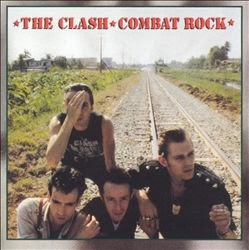
album cover of The Clash - Combat Rock
When I think about what’s the “right” response to lack of accessibility, I’m reminded of that line from that song by The Clash:

"Should I stay or should I go now?
If I go there will be trouble,
If I stay it will be double."

Is it better to leave the place and follow up later, or stay and make your point on the scene, publicly? I think a lot depends on the person, which methods work best for them and fit their personalities. It would have been interesting if William Peace (a.k.a. “Bad Cripple”) had stayed at the conference and called the organizers out for their … no other word for it … stupidity. But I trust he knew himself, and perhaps knew his audience too, and did the best, most effective thing for the occasion. Becki, Izabella’s mother, had other concerns and arguably more at stake. If she’d basically boycotted her child’s pageant, her child would have suffered even more, and at four years old is probably too young to understand the trade-offs and sacrifices involved in self-advocacy.

Every situation and every person is different, but we all have to grapple with the same questions. Am I being unreasonable? Is the access that’s there “good enough”, even if it isn’t perfect? Am I good with confrontation? Can I keep my cool while making a strong impression? Can I even afford to leave and try somewhere else right now? Am I advocating for myself, for now, or for the next visitor with a disability … for posterity? Is the problem a truly "innocent" mistake, or should this person or organization really know better? Does it matter?

And of course, will I live to see a day when this kind of situation is truly rare?