
Tuesday, November 19, 2013

My Obamacare Experience, Part II
I said back in early October that I would document my Obamacare experience, so here's the next installment.
A few days ago, I went back to New York State's Insurance Exchange website, nystateofhealth.ny.gov. I found that the account I wasn't sure I'd properly set up in early October, was set up properly. I then started a full trip through the website to find out what I might qualify for, given my slightly unusual situation. So far, everything has worked out fine, and I have a pretty good idea of what's going to happen with my health insurance.
First, I'll continue with a slightly different plan that my former employer has chosen, which I'll pay for through the COBRA provisions. Sometime in January or February, if the information I have is correct, I'll move over to Medicaid, which I will stay with unless and until I find a job that ups my income sufficiently and / or provides better coverage. Given the breadth of Medicaid coverage in New York, it may be hard to find a better policy for any price, but you never know.
My conclusions? Speaking only for myself ...
1. New York’s Exchange website worked fine, supported by a helpful and fairly quick phone call when I had trouble understanding one of the questions put to me.
2. It looks like I have marginally more choices in health insurance now than I've ever had before, more possible contingency plans should my employment or money situation change, and a confidence I never had before that my health insurance ... which is absolutely essential to my survival ... will no longer depend on my employment status.
By the way, I once again recommend following Sarah Kliff’s daily updates on the Affordable Care Act, at Washington Post’s Wonkblog. Her reports are easy to understand, sober, and in-depth.
"Should I Stay Or Should I Go?"

That Crazy Cripple Chick - November 12, 2013
Bad Cripple - November 17, 2013
Megan Rogers, Inside Higher Ed - November 19, 2013
Ellen Seidman, Love That Max: Special Needs Blog - November 19, 2013
I’ve read four pieces on accessibility failures in just the last week. That may not sound like many, but it is unusual. Most disability-related stories and blog posts aren’t specifically about accessibility, so this many in such a short time looks like a mini-trend. At any rate, reading them one after the other, I think you’ll find the same themes cropping up.
Of course, the most obvious is that businesses and other public spaces are still not as wheelchair accessible as they should be. The only thing that amazes me more than this is the number of people who are amazed by this. I can’t tell you how many non-disabled people have told me about trying to have dinner at a restaurant with a disabled relative, and asking me, without irony, “Didn’t the ADA require all places to be accessible long ago?” Welcome to our world!
What's really got me thinking though is the variety of ways people respond to accessibility barriers. The person in the first article wrote a letter to convention organizers. The second left the conference to which he’d been personally invited. In a followup, we see that this person did follow up and got some response from the organizers, though their stated action plan seems to me to leave plenty of room for further procrastination and excuse-making. Then we have a mother who comes at the issue from a different angle. As a parent, she’s in some ways more distant from the issue, and at the same time potentially more fierce in her response.
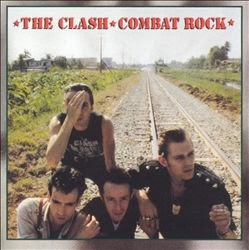
When I think about what’s the “right” response to lack of accessibility, I’m reminded of that line from that song by The Clash:
"Should I stay or should I go now?
If I go there will be trouble,
If I stay it will be double."
Is it better to leave the place and follow up later, or stay and make your point on the scene, publicly? I think a lot depends on the person, which methods work best for them and fit their personalities. It would have been interesting if William Peace (a.k.a. “Bad Cripple”) had stayed at the conference and called the organizers out for their … no other word for it … stupidity. But I trust he knew himself, and perhaps knew his audience too, and did the best, most effective thing for the occasion. Becki, Izabella’s mother, had other concerns and arguably more at stake. If she’d basically boycotted her child’s pageant, her child would have suffered even more, and at four years old is probably too young to understand the trade-offs and sacrifices involved in self-advocacy.
Every situation and every person is different, but we all have to grapple with the same questions. Am I being unreasonable? Is the access that’s there “good enough”, even if it isn’t perfect? Am I good with confrontation? Can I keep my cool while making a strong impression? Can I even afford to leave and try somewhere else right now? Am I advocating for myself, for now, or for the next visitor with a disability … for posterity? Is the problem a truly "innocent" mistake, or should this person or organization really know better? Does it matter?
And of course, will I live to see a day when this kind of situation is truly rare?
Monday, November 18, 2013

Disability News

Lucy Berrington, Psychology Today - November 14, 2013
This is a very good primer on the Autism Speaks controversy. I like the way it is structured around the kinds of questions people unfamiliar with the issue are likely to ask. This is the kind of issue outline that should be prepared for all sorts of disability issues that get mainstream media attention. It’s right to complain about journalists’ ignorance of disability issues, but it’s also probably up to us to educate them.
Bob Greene, CNN - November 17, 2013
I honestly thought when I started reading this article that the disabled man was going to turn out to have been killed, maimed, or tortured. I’ll bet he was scared to death, and probably felt extra humiliated because he was targeted for his disability. But, I can’t help feeling that Bob Greene’s tone in the article just doesn’t match the actual severity of what happened. The man was robbed, but he wasn’t injured. I know that’s not saying much, but it’s not nothing. Maybe I’m just naturally contrary about these stories, but I see evidence of a story about a significantly disabled man who lives independently, has full mobility in society, and who is taking a rare but not unheard-of misfortune of city life … a mugging … in stride. Yes, he was targeted because of his disability, but there’s nothing in the article that suggests it was anything like a “hate crime”. I feel bad for the man, and I do think it’s pretty low to target a person in a wheelchair this way, but sorry, I don’t get the “revulsion”.
Ableism In A Nutshell
I’m re-watching the early seasons of “Downton Abbey”, the ITV / PBS series that takes place in England in the ten or so years after 1912. In Season 2, a main character has a spinal cord injury from fighting in World War I. He’s being pushed around the big estate’s grounds in his wheelchair, by his on / off, will they / won’t they lover.
He, the disabled man, says, “I’m strong enough to push myself.” She, the non-disabled woman replies, “I’ll be the judge of that.”
It’s a tossed-off line, not the start of an argument, not even a mild one. It’s just something they say. But what a pure, distilled example of one of the main forms of ableism.
Sunday, November 17, 2013

Weekly Wrap-Up

Links to last week's "Disability Thinking" blog posts ...
Sunday, November 10, 2013
Monday, November 11, 2013
Tuesday, November 12, 2013
Wednesday, November 13, 2013
Thursday, November 14, 2013
Friday, November 15, 2013
Saturday, November 16, 2013
Saturday, November 16, 2013

Daily Doses
I don’t only visit disability blogs and websites. I also have a list of other sites I read pretty much every day …
Press-Republican … My hometown newspaper.
Wonkblog ... Part of the Washington Post website, Wonkblog offers several posts a day on current events, with a greater focus on policy, data, and how things actually work than most editorial blogs. It's a good place to find simple yet thorough "explainer" articles on current hot topics in the news. They also manage to maintain a fairly lighthearted style, while never trivializing important issues. Wonkblog is worth a look for it's coverage of the Affordable Care Act alone.
Salon.com … I’ve been reading this online magazine since the mid 1990s, though I find myself appreciating it a little less these days. I read Salon for its coverage of politics and cultural trends, and for a few of it's columnists, such as Alex Pareene and Joan Walsh.
Eschaton … I admire blogger Duncan Black’s brief style, (which pre-dates Twitter), and generally agree with his political views. He’s especially good at getting to the heart of complex issues, and isn’t afraid to repeat himself, especially ideas that don’t get enough airing.
Matthew Yglesias … A good blogger on economics from a Democratic / moderately liberal perspective. Like most of the other bloggers at Slate, he likes to explore seemingly counter-intuitive, but possibly valid ideas.
Ta-Nehisi Coates … I’m not particularly well read on issues of race, but for what my opinion's worth, Coates is far and away the most exciting, challenging, poetic writer on race, ethnicity, and gender I’ve ever read. I also find that his writings on race have affected my understanding of disability, even though as far as I know, he has never written about disability.
Balloon Juice … An important aspect of the blog’s history is that it’s founder, John Cole, started the blog in the early 2000’s as a staunch Republican, rabid Bush supporter, and loud defender of the Iraq War. You wouldn’t know it now, except that Cole applies the same passion and pugnacity to his writings as a staunchly liberal Democrat. Actually, most of the posts are by an equally excellent slate of bloggers that Cole manages. A good place to learn how to use casual language and an artful touch of crudeness in service of ideas you really care about.
The A.V. Club … My starting point for popular culture of all kinds, and a first stop for reviews on my favorite TV shows.
The Dissolve ... A fairly new website on films of all kinds, both new releases and old classics. If you like movies, and would like to know more about movie history, this is a great site to visit regularly.
What are your favorite daily Internet reads?
Friday, November 15, 2013
Here's The Thing ...
Some images of disabled people are really cool and empowering. Others are sweet and sentimental. Which kind you prefer depends a lot, and says a lot, about your personality.
Test The Disability Bechdel Test

Last Friday I tried to come up with a workable version of the “Bechdel Test” for disability on film and TV. I think I’ve got it now.
To recap, the Bechdel Test is a way to assess the portrayal of women in movies, television, or literature. A work “passes” the Bechdel Test if it:
1) Features at least two women, who
2) Talk to each other,
3) About something other than a man.
So, here’s my proposed Disability Bechdel Test. A work passes if:
1) Characters with disabilities are involved in significant plot developments not centered on their disabilities.
2) Disabilities are depicted realistically, neither less, nor more severe than they would be in real life.
3) Disabled characters are givers as well as receivers … supportive of other characters, not just supported by them.
I couldn’t come up with a test as elegant and unified as the original, but I think these three measures cover a lot of ground. They address important aspects of character, plot, and writing, not a laundry list of pet peeves. They aren’t about either “positive” or “negative" portrayals, they encourage realistic, three-dimensional depictions that allow us to get to “know” people with disabilities, not just react to them. I also think that TV shows and movies that do “pass” this test tend to be the better works overall.
Try this test on your favorite, or not so favorite, disability-themed TV shows and movies. What passes the test and what doesn’t? Next Friday, I’ll test two films, “Forrest Gump” and “My Left Foot”, and two TV shows, “Parenthood” and “Ironside” (both versions!).
Thursday, November 14, 2013
Photo Of The Day

From the Cripple Fabulous Tumblr blog.
Please do click the link to read an example of why the phrase “wheelchair bound” is so inappropriate.
Subscribe to:
Posts (Atom)